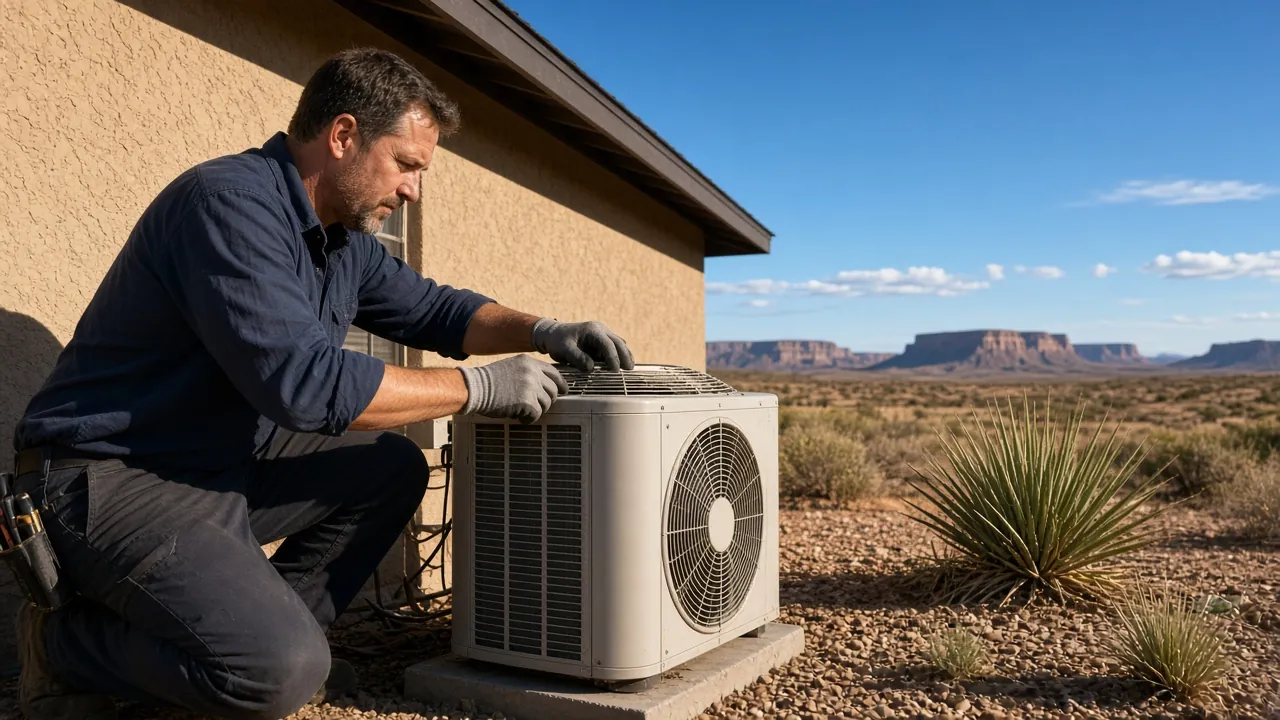
Pueblo · Pueblo West · Pueblo County
HVAC in Pueblo, CO
No heat, no cool or a system on its last legs? Tell us what is going on and a local technician will reach out with a free quote.
- Same day service option
- Diagnosis before repair
- Price explained up front
Request a free quote
- HoursMon to Fri 7 AM to 7 PM, Sat 8 AM to 5 PM
- Same day optionAsk early and check the same day box
- Check the licenseAsk to see a current Pueblo mechanical license
- LocalZIPs 81001 to 81012 and nearby towns
Quick answer: Good HVAC in Pueblo starts with a real diagnosis, not a parts swap. Our summers bring more than 70 days at 90 degrees or hotter, and winter nights drop into the teens. That is a hard workload for any furnace or air conditioner. Pueblo Heating & Air connects you with a local technician who tests the system, tells you what failed and why, and gives you the price before any work starts. When people search HVAC Pueblo CO, they usually need one of three things fast: heat, cooling or a straight answer.
Anyone who has spent a July afternoon on the East Side or a January morning in Pueblo West knows the swing. The sun is strong, the air is dry and the temperature can move 30 degrees between dawn and dinner. Equipment here runs hard in both seasons, and small problems turn into big ones fast.
This page covers the problems we see most in Pueblo homes, how a good technician handles them, what you can check on your own and what to ask before you hire anyone. If you already know you need help, send the quote form and skip ahead.
Services
Pueblo HVAC Services
Pick a service to see how the job is done here, what warning signs to watch for and what to ask your technician.
AC Repair
Warm air, short cycling, frozen lines or a dead condenser on a 100 degree day.
Furnace Repair
No heat, a failed igniter, a tripped limit switch or a furnace that keeps locking out.
Heating Repair
Boilers, wall heaters, baseboard heat and thermostat problems in older homes.
Heat Pumps
Repair, sizing and cold climate heat pump installs for Pueblo winters.
Ductless Mini Splits
Zoned heating and cooling for additions, garages and homes with no ducts.
Air Duct Cleaning
Duct cleaning when there is a real reason, plus leak sealing and filter advice.
AC Installation
Load calculation, permit, matched equipment and a startup check on new central air.
Local climate
Why Pueblo Is Hard on Furnaces and Air Conditioners
Pueblo sits at about 4,692 feet where Fountain Creek meets the Arkansas River. NOAA records at Pueblo Memorial Airport show a semi arid climate with about 12 inches of rain and snow melt a year. That mix shapes almost every service call in town.
- Long, hot summers: NOAA normals show an average July high of about 93 degrees, with roughly 72 days a year at 90 or above and about 12 days at 100 or above. A condenser that is a little low on charge or has a dirty coil will quit on the hottest day of the year.
- Cold nights: the average January low is about 15 degrees, and the record low is 31 below zero. A furnace that starts and stops all night wears its igniter, flame sensor and inducer motor quickly.
- Big daily swings: the average gap between the daily high and low is more than 30 degrees. Many homes call for cooling in the afternoon and heat the next morning in spring and fall.
- Dust and cottonwood fluff: wind carries fine dust across the plains, and cottonwoods along the river drop fluff every spring. Both pack into outdoor coils and furnace filters.
- Altitude: air is thinner at 4,700 feet. Gas furnaces and water heaters often need a high altitude setup from the installation manual so they burn clean and do not overheat.
Dry air also changes how people cool their homes. Evaporative coolers, often called swamp coolers, still sit on plenty of Pueblo roofs. They work well here because low humidity lets water soak up heat. Many families now run a cooler for mild days and central air or a heat pump for the hottest weeks.
Common problems
The HVAC Problems We See Most in Pueblo Homes
AC blowing warm air
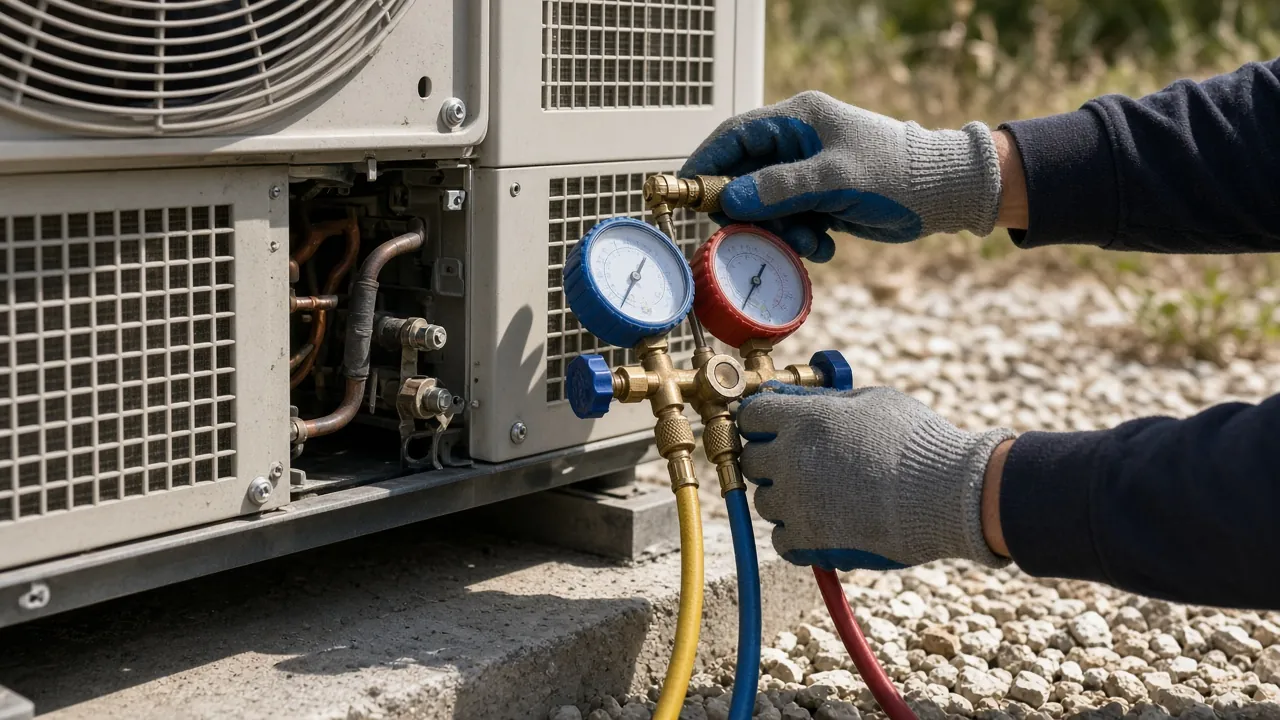
Usually a failed capacitor, a dirty outdoor coil, a refrigerant leak or a tripped float switch on the drain line. A technician checks pressures and temperatures before adding anything. See AC repair.
Furnace will not light
A cracked hot surface igniter, a dirty flame sensor or a blocked flue are the usual suspects. Error codes on the control board narrow it down. See furnace repair.
Uneven rooms
Upstairs too hot, back bedroom too cold. Leaky ducts, closed dampers and an undersized return are common causes in older homes. See heating repair.
Heat pump icing up
Some frost in winter is normal, and the unit should clear it in a defrost cycle. A solid block of ice is not normal. See heat pump service.
No ducts to the room
Garage conversions, sunrooms and additions often have no ductwork. A ductless mini split heats and cools one zone without new ducts. See mini splits.
Dusty vents
Dust on the registers can point to leaky return ducts pulling in attic or crawl space air. Cleaning helps only when the leaks get sealed too. See duct cleaning.
When the system is past saving, the next step is a properly sized replacement. Read how a new system should be chosen and set on our AC installation page.
Our Process
Our Process: From First Call to Final Check
1. Tell us the problem
Send the short form with your ZIP and what the system is doing. A photo of the unit label or thermostat helps.
2. Diagnosis
A local technician tests the system: power, airflow, temperatures, pressures and safety controls.
3. Plan and price
You hear what failed, why it failed and what the fix costs. Nothing starts until you agree.
4. Repair or install
The work gets done to code, with a permit when the job calls for one.
5. Final check
Your technician runs the system through a full cycle and shows you the readings.
Before & After
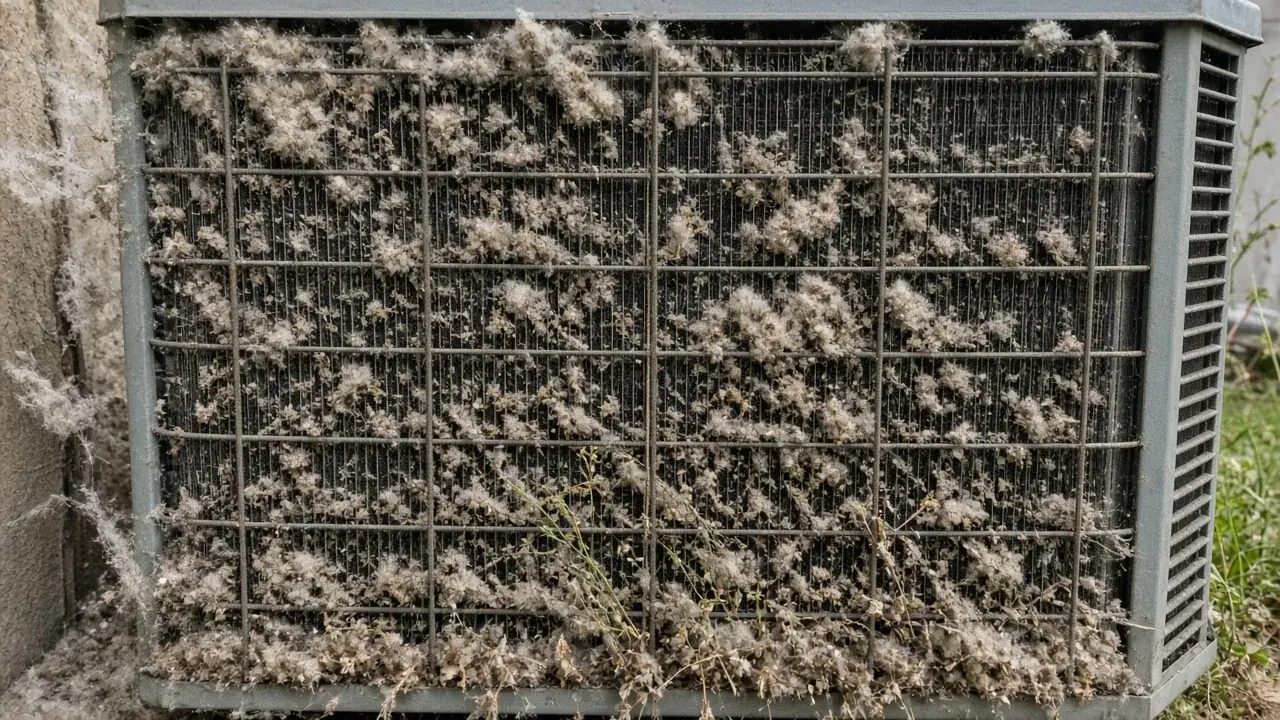
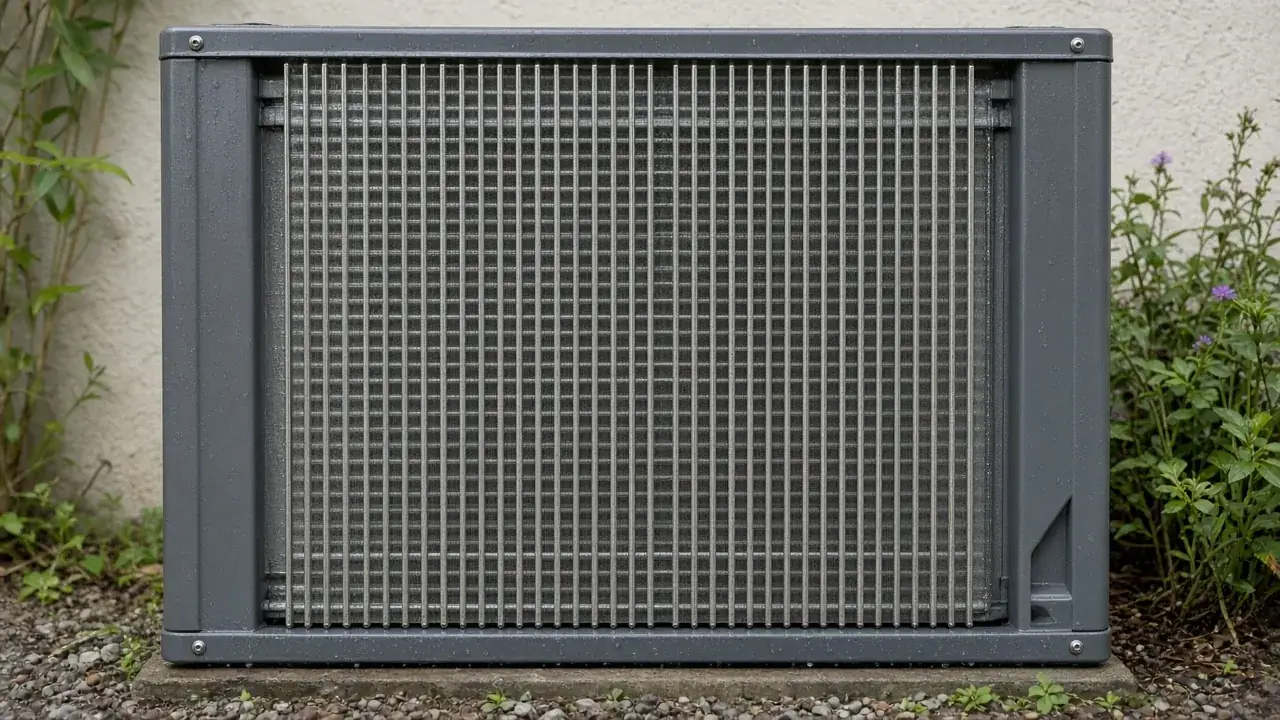
Before and After: Cleaning an Outdoor AC Coil
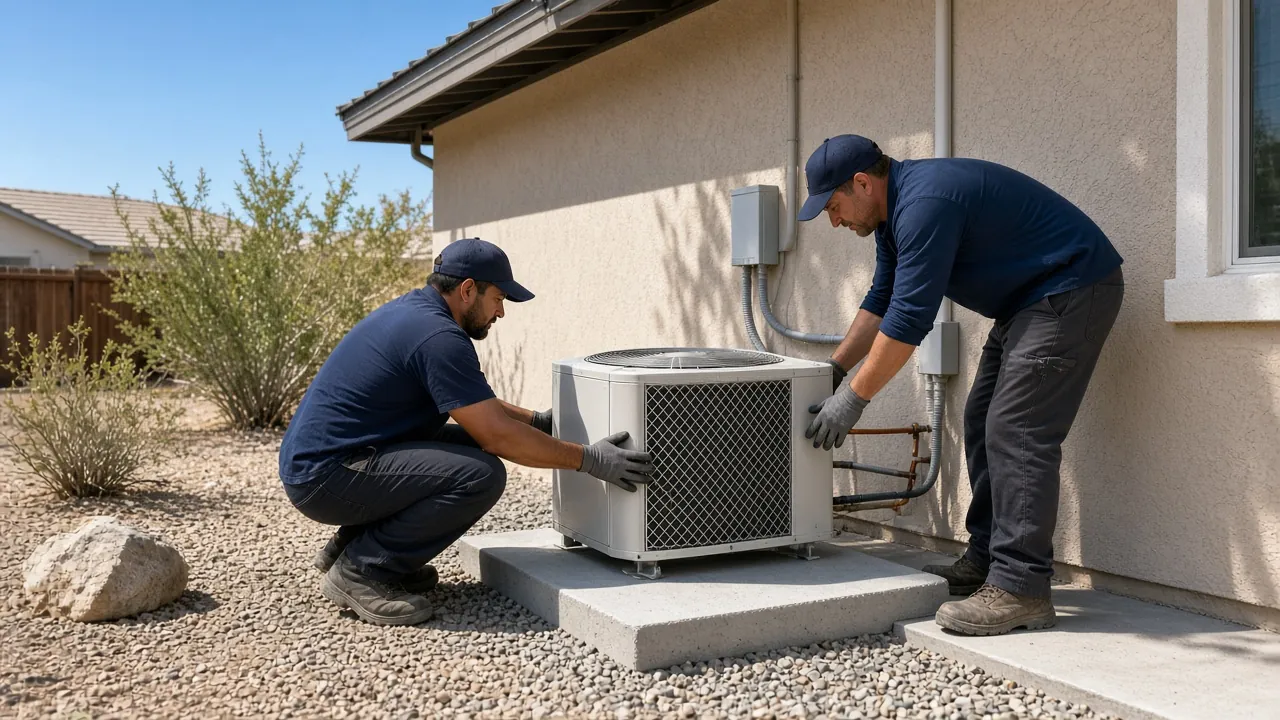
Cottonwood fluff and dust can choke an outdoor coil in a single season. The unit then runs hot, uses more power and can trip off on high pressure. Here is what a clean coil should look like.
Season by season
A Year of Heating and Cooling in Pueblo
Most breakdowns follow the calendar. Knowing what is coming lets you get ahead of it.
- Spring: the best time for an AC tune up. Clear cottonwood fluff from the coil, change the filter and test the system on a mild day before the first heat wave.
- Summer: peak AC season. Capacitors, contactors and fan motors fail most often in long heat. July and August are also the wettest months of the year, and afternoon storms can knock the power off and on.
- Fall: furnace check time. Test the heat in October before the first cold front so you are not stuck in line with everyone else.
- Winter: igniters, flame sensors and inducer motors get the most work. Keep snow and ice off heat pumps and away from furnace vent pipes on the side of the house.
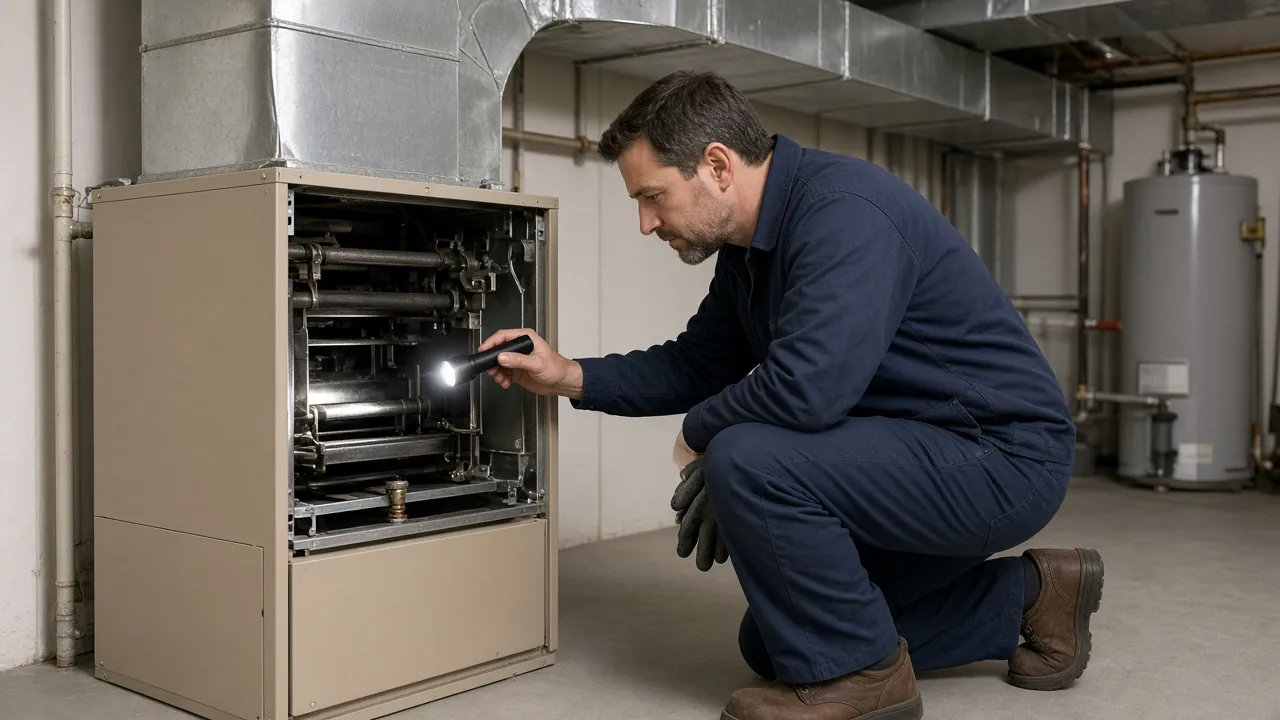
Carbon monoxide deserves a word of its own. The EPA says fuel burning appliances that are not adjusted or vented right can release this odorless gas. Put a CO alarm near every sleeping area, and have the furnace and flue checked each fall.
Do it yourself
Simple Checks Before You Call
A lot of no heat and no cool calls end with a quick fix the homeowner could have made. Try these first. If none of them works, the problem needs a trained hand.
- Check the thermostat: make sure it is set to heat or cool, the setting is a few degrees past room temperature and the batteries are fresh.
- Check the breakers: the furnace or air handler and the outdoor unit usually have their own breakers. Reset a tripped one once. If it trips again, stop and call.
- Change the filter: the U.S. Department of Energy suggests checking it monthly. Dusty Pueblo summers can clog one fast.
- Look at the furnace switch: there is often a light switch on or near the furnace. Someone may have flipped it off by mistake.
- Rinse the outdoor coil: with the power off, spray gently from the inside out with a garden hose. Never use a pressure washer on the fins.
- Clear the drain: a full condensate pan or a clogged line can trip a safety switch and shut the AC down.
Leave refrigerant, gas valves and electrical parts to the pros. The EPA Section 608 rules require technicians who handle refrigerant to be certified, and gas work in Pueblo needs a licensed contractor.
Hiring
What to Ask Before You Hire an HVAC Contractor in Pueblo
- Can I see your current license? Inside Pueblo and Boone city limits, contractor licensing and permits run through the regional building department, which is moving to the Southern Colorado Building Department name. Pueblo West and other unincorporated areas go through the Pueblo County Building Division. Both require a mechanical contractor license for HVAC and gas work.
- Will you pull a permit? The building department FAQ says a mechanical or electrical permit is required to install or replace a furnace or air conditioner, and smoke and CO alarms must be placed right as part of the job.
- Are you EPA 608 certified? Anyone who opens a refrigerant circuit must be.
- Did you do a load calculation? A new system should be sized for your house, not matched to the old one by label alone.
- What does the price include? Ask about the permit, haul away, the pad, the thermostat and any duct changes.
- Do I qualify for rebates? If Black Hills Energy is your utility, its Colorado residential rebate program lists rebates on qualifying heat pumps, central AC, evaporative coolers and smart thermostats. Your invoice must show model and serial numbers, so ask for them.

Service areas
Heating and Cooling: Pueblo, CO and Nearby Towns
Requests come from every corner of town. Older homes in Bessemer, Mesa Junction and the blocks around the Union Avenue Historic District often have original ducts, boilers or furnaces tucked in tight basements. Newer homes in Belmont near CSU Pueblo, on the North Side and out in Pueblo West tend to have attic or crawl space ducts and larger central air systems. We take requests from all Pueblo ZIP codes, 81001 through 81012.
We also take requests from Pueblo West, Avondale and Boone to the east along U.S. 50, and from Colorado City, Rye and Beulah to the southwest. Foothill homes in Rye and Beulah sit higher than town and run colder at night, so heating systems there work harder through the winter.
Businesses are welcome too. Shops, offices and restaurants along Northern Avenue, Pueblo Boulevard and downtown deal with the same heat and dust as homes, only with more hours of runtime. Mention your business on the form and your technician will plan around your hours.
FAQ
Heating and Cooling Questions From Pueblo Homeowners
How much does HVAC repair cost in Pueblo?
It depends on the part that failed, the age and type of the system and how long the job takes. A capacitor swap and a compressor replacement are very different jobs. Your technician diagnoses the problem first and gives you the price before any work starts.
Do I need a permit to replace my furnace or AC in Pueblo?
Yes. The Pueblo Regional Building Department says a mechanical and or electrical permit is required to install or replace a furnace or air conditioning system. Pueblo West and other unincorporated areas go through the Pueblo County Building Division.
How do I check if an HVAC contractor is licensed in Pueblo?
Ask to see the current license. The building department FAQ says you can call 719 543 0002 to confirm a license is current. HVAC and gas work needs a mechanical contractor license.
Does altitude affect my furnace?
It can. Pueblo sits at about 4,692 feet, and thinner air changes how gas burns. Many furnace installation manuals call for a high altitude setup above a set elevation. Your technician should check the manual and the gas pressure on any new install.
Can I get same day HVAC service?
Same day service is an option. Send the quote form early in the day and check the same day box. Whether a technician can come that day depends on the route, so the earlier you ask the better.
Is a heat pump a good fit for Pueblo winters?
For many homes, yes. The U.S. Department of Energy says newer air source heat pumps are now a real heating option in colder places. Cold climate models hold more output in deep cold. Many homes keep a furnace as backup for the coldest nights.
How often should I change my furnace filter?
Check it every month and change it when it looks dirty. The Department of Energy suggests a monthly check. Dust and cottonwood season can clog a filter faster here.
Are there rebates for new HVAC equipment in Pueblo?
If Black Hills Energy is your utility, its Colorado residential rebate program lists rebates for qualifying heat pumps, central air, evaporative coolers, furnaces and smart thermostats. Terms change each year, so check the current application before you buy.
What areas do you take requests from?
Requests are welcome from all Pueblo ZIP codes, 81001 through 81012, plus Pueblo West, Colorado City, Beulah, Rye, Avondale and Boone. Send the quote form with your ZIP code to check.
Same day service option
Get Your Free HVAC Quote
Send the short form and a local Pueblo technician will reach out to set a time. Same day service is an option when you ask early.
Pueblo, CO
Request a free quote online
Sources
- NOAA NCEI: U.S. Climate Normals 1991 to 2020 (Pueblo Memorial Airport)
- National Weather Service Pueblo
- U.S. Department of Energy: Home Heating Systems
- U.S. Department of Energy: Heat Pump Systems
- U.S. EPA: Carbon Monoxide and Indoor Air Quality
- U.S. EPA: Section 608 Refrigerant Management
- Pueblo Regional Building Department: FAQ
- Pueblo County Code Chapter 15.10: Contractor Licenses
- Black Hills Energy: Colorado Electric Residential Rebates
Pueblo Heating & Air is a referral service. We pass your request to an independent local heating and cooling contractor who does the work. Ask your technician to show their current Pueblo mechanical contractor license before work starts.