AC Repair · Pueblo, CO
AC Repair in Pueblo, CO
When it is 98 degrees on the East Side and the vents are pushing warm air, nobody wants a guess. You want someone who tests the system, finds the cause and fixes it right the first time.
- Same day service option
- Free quote request
- Pueblo · Pueblo County
Quick answer
Most AC repair calls in Pueblo come down to a handful of parts: a weak capacitor, a burned contactor, a dirty outdoor coil, a clogged drain or a refrigerant leak. A good technician measures before replacing anything. Pueblo Heating & Air connects you with a local technician who tests the unit, explains what failed and gives you the price before work starts.
Why Air Conditioners Fail Here
Pueblo is hard on cooling equipment. NOAA climate normals for Pueblo Memorial Airport show about 72 days a year at 90 degrees or hotter and about 12 days at 100 or more. The average July high is about 93 degrees. On those days an outdoor unit may run from noon until well after dark.
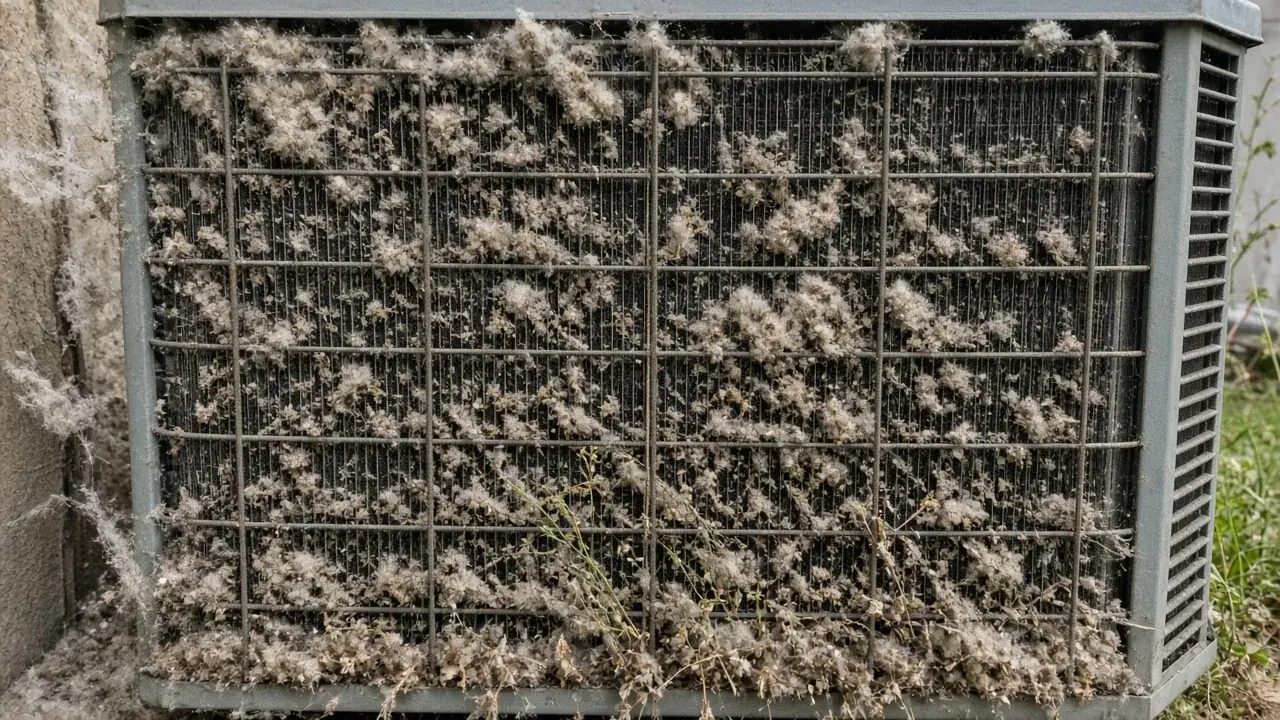
Heat is only part of it. Wind pushes fine dust into the coil fins. Cottonwoods along the Arkansas River and Fountain Creek drop fluff every spring, and it mats on the coil like felt. A matted coil cannot shed heat, so pressures climb, the compressor runs hot and parts start to fail.
Then there are the storms. July and August are the wettest months of the year here. Afternoon storms can drop power for a moment and bring it back, which is rough on capacitors and control boards.
Signs You Need Air Conditioner Repair
- Air from the vents feels cool but not cold, or plain warm.
- The outdoor fan is not spinning, or it hums and will not start.
- The system turns on and off every few minutes.
- Ice on the copper line at the outdoor unit or on the indoor coil.
- Water around the furnace or air handler.
- A breaker that trips again after you reset it.
- Clicking, buzzing, grinding or squealing that was not there before.
- Power bills climbing with no change in how you use the house.
What a Technician Checks First
A real diagnosis follows the same order every time. It starts with the simple stuff and works toward the parts that cost real money.
- Power and controls: voltage at the disconnect, the thermostat call and the low voltage wires.
- Capacitor: measured against the rating printed on its side. A weak capacitor is the most common summer failure we see.
- Contactor: pitted or burned points can keep the condenser from starting.
- Airflow: filter, blower speed, the indoor coil and supply temperature.
- Outdoor coil: fluff, dust, bent fins and weeds or a fence too close to the unit.
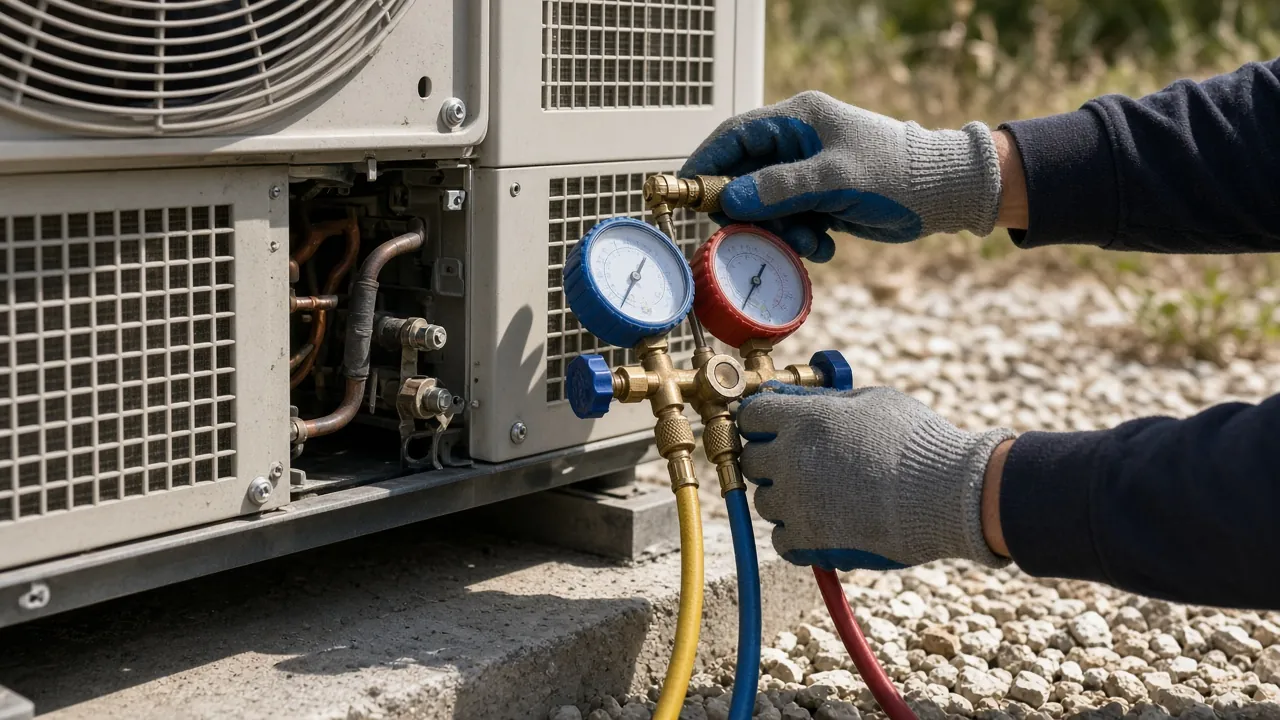
- Refrigerant: pressures and line temperatures, read against the maker's charging chart.
- Drain: the condensate line, pan and float switch.
What Your Technician Will Do
- Listen and look
Your technician asks what the system has been doing and when it started. Then they look over the thermostat, the indoor unit and the condenser before opening anything.
- Test, do not guess
They take readings: volts, amps, capacitor values, temperature drop across the coil and refrigerant pressures. The readings point to the problem.
- Explain the fix and price
You hear what failed, why it failed and what it costs to fix. If the repair is big and the unit is old, they lay out repair and replace side by side so you can decide.
- Repair
Most common repairs, like a capacitor, contactor, fan motor or drain clean out, take one visit. Refrigerant leaks take more work because the leak has to be found and fixed before the system is recharged.
- Confirm it works
The system runs through a full cooling cycle. Your technician checks the temperature split and amp draw and shows you the numbers.
Refrigerant Leaks Done Right
Low refrigerant is a symptom, not a cause. A sealed system does not use up refrigerant. If it is low, it leaked. Topping it off without finding the leak just means paying again next summer.
The EPA Section 608 rules require technicians who buy or handle refrigerant to be certified, and they set rules on leak repair and venting. Ask your technician if they are 608 certified.
Many older units in Pueblo still run on R22. The EPA phased out new production of R22 in 2020, so repairs on those systems depend on recovered or stored supply. On an old R22 unit with a big leak, replacement is often the better long term choice. Your technician should explain both paths.
Repair or Replace?
There is no single rule, but these points help:
- Age: a system near or past 15 years with a major failure is a strong replace candidate.
- Refrigerant type: an R22 system with a leak is costly to keep going.
- Repair history: a third big repair in a few years is a sign.
- Comfort: rooms that never cool, or a unit that runs all day and cannot keep up, may point to an undersized or worn system.
If replacement makes more sense, read how a new system should be sized and set on our AC installation page.
Keep Your AC Running All Summer
- Change or check the filter every month during cooling season.
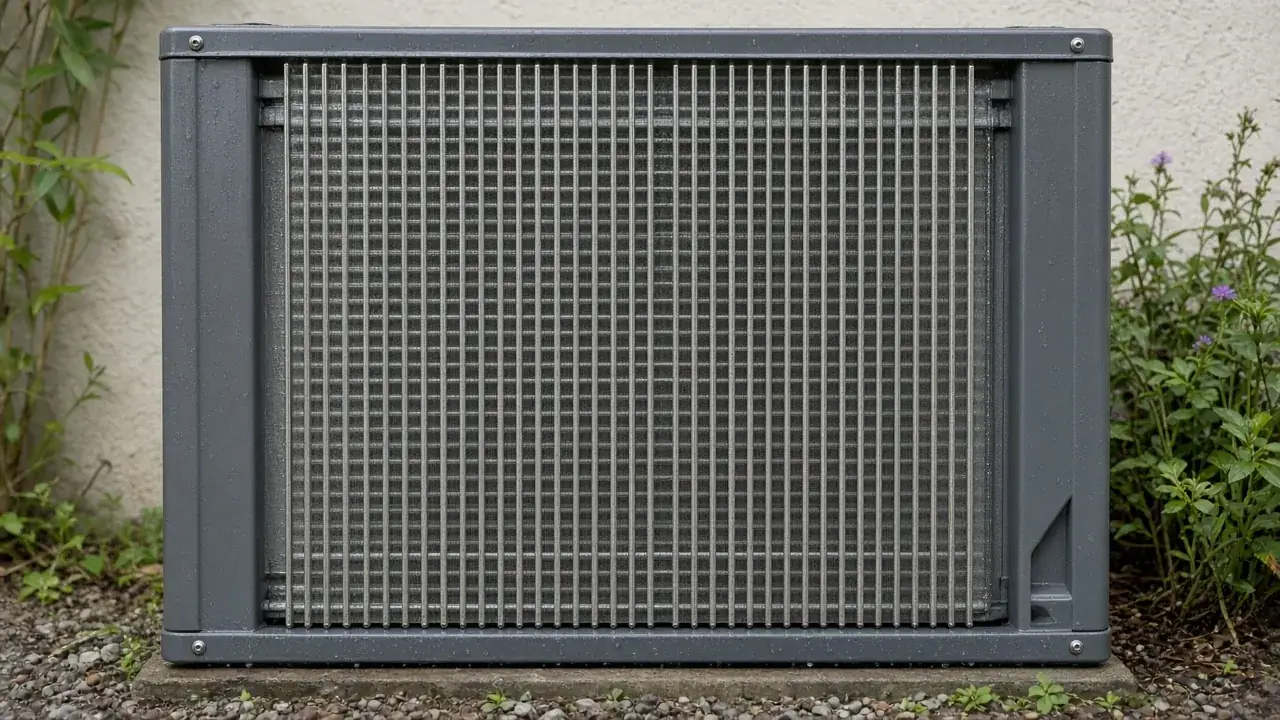
- Rinse the outdoor coil from the inside out with a garden hose in late spring, with the power off.
- Keep at least two feet of space around the condenser. Trim shrubs and move trash cans.
- Pour a cup of water down the drain line in early summer to make sure it flows.
- Keep blinds closed on west facing windows on hot afternoons.
- Get a spring tune up before the first heat wave, not after.
A dirty filter and a dirty coil make any system work harder. Clean ones help it cool better on less power.
What About Swamp Coolers?
Plenty of Pueblo homes run an evaporative cooler. They work well in dry air, but they need their own care: new pads, a clean pan, a working pump and a tight cover for winter. Many homes run a cooler on mild days and central air on the hottest ones. Tell your technician if you have both, so they can check that the cooler duct is closed off when the AC is running.
AC Repair Questions
Why is my AC running but not cooling?
The most common causes are a dirty filter, a dirty outdoor coil, a failed capacitor that keeps the outdoor fan or compressor from running, or low refrigerant from a leak. A technician can tell which one with a few readings.
Why is there ice on my AC lines?
Ice usually means low airflow or low refrigerant. Turn the cooling off and run only the fan to thaw it, then change the filter. If it ices again, call for service.
Can I add refrigerant myself?
No. Federal rules require EPA Section 608 certification to buy and handle most refrigerants. Adding it without finding the leak also does not fix the problem.
How long does a typical repair take?
Simple part swaps often take an hour or less once the cause is found. Leak searches and compressor jobs take longer. Your technician will give you a time estimate with the price.
Is it worth fixing a 15 year old air conditioner?
Sometimes. A cheap part on a sound system is worth fixing. A failed compressor or a big leak on an old unit often is not. Ask for repair and replace prices side by side.
Same day service option
Get Your AC Fixed in Pueblo
If you searched for AC repair near me from a hot living room in Pueblo, Pueblo West or Avondale, this is the fastest next step. The longer a struggling system runs, the more it can damage the compressor. Send the short form and a local technician will reach out to set a time. Same day service is an option when you ask early.
More services
Other HVAC services in Pueblo, CO
Furnace Repair
No heat, failed igniters, dirty flame sensors and lockouts traced to the real cause.
Heating Repair
Boilers, wall furnaces, baseboard and radiant heat, plus the odd systems older homes still run.
Heat Pumps
Repair and installation of standard and cold climate heat pumps, including dual fuel setups.
Ductless Mini Splits
Ductless heat pumps for additions, garages, basements and older homes with no ductwork.
Air Duct Cleaning
Honest advice on when duct cleaning helps, and a full source removal job when it does.
AC Installation
New and replacement central air, sized with a load calculation and installed with a permit.
Sources
- NOAA NCEI: U.S. Climate Normals
- U.S. EPA: Section 608 Refrigerant Management
- U.S. EPA: Phaseout of Ozone Depleting Substances
- U.S. Department of Energy: Home Cooling
- U.S. Department of Energy: Home Cooling
Before & After
Before and after: what a clean coil looks like