Furnace Repair · Pueblo, CO
Furnace Repair in Pueblo, CO
The first cold snap of the year always finds the weak furnaces. If yours is clicking, blowing cold air or not starting at all, the cause is usually one of a few parts.
- Same day service option
- Free quote request
- Pueblo · Pueblo County
Quick answer
Most furnace repair calls in Pueblo trace back to a dirty filter, a cracked igniter, a dirty flame sensor, a pressure switch problem or a blocked vent. A trained technician reads the error code, tests each safety control and checks for carbon monoxide. Pueblo Heating & Air connects you with a local technician who explains the fix and price before work starts.
Why Furnaces Work Hard in Pueblo
Winter days here are often mild and sunny, but nights are cold. NOAA normals put the average January low near 15 degrees, and the city sees about 6 nights a year at zero or below. The record low is 31 below. A furnace may sit idle most of a sunny afternoon and then run hard from dusk until morning.
Altitude matters too. Pueblo sits at about 4,692 feet. Thinner air means less oxygen for the flame. Many furnace makers list a high altitude setup in the installation manual, which can mean a different gas orifice or pressure setting. A furnace that was never set up for altitude can run hot, trip its limit switch or make more carbon monoxide.
Signs Your Furnace Needs Service
- No heat, or the blower runs but the air is cold.
- The furnace starts, runs a minute and shuts down.
- A blinking light code on the control board.
- Loud bangs at startup, squealing or rattling.
- Yellow, lazy or lifting flames instead of a steady blue flame.
- A CO alarm going off, or headaches that ease when you leave the house.
- Soot around the furnace or a vent pipe that is loose or rusted through.
If a CO alarm sounds, get everyone outside and call 911 or your gas utility first. Do not wait for a repair visit.
The Usual Suspects
Modern gas furnaces follow a set startup order: the thermostat calls, the inducer motor starts, a pressure switch proves the vent is clear, the igniter glows, gas flows, the flame sensor proves fire and the blower comes on. A failure at any step stops the sequence, and the board flashes a code.
- Dirty filter: cuts airflow, the heat exchanger overheats and the high limit switch shuts the burners off. This is the cheapest fix and the most common.
- Hot surface igniter: these crack with age. A cracked igniter may glow on some tries and fail on others.
- Flame sensor: a thin film builds up on the rod, the board cannot prove a flame and it shuts the gas off after a few seconds.
- Pressure switch and inducer: a blocked vent, a cracked hose, water in the line or a weak inducer motor keeps the switch from closing.
- Condensate drain: high efficiency furnaces make water. In a cold garage or crawl space the line can freeze, back up and shut the furnace down.
- Blower motor or capacitor: the burners light but the house never warms.
What Your Technician Will Do
- Read the code
Your technician checks the thermostat, the filter, the power and the light code on the board. The code narrows the search.
- Test the sequence
They watch the furnace go through startup and test each part in order: inducer, pressure switch, igniter, gas valve, flame sensor and blower.
- Check safety
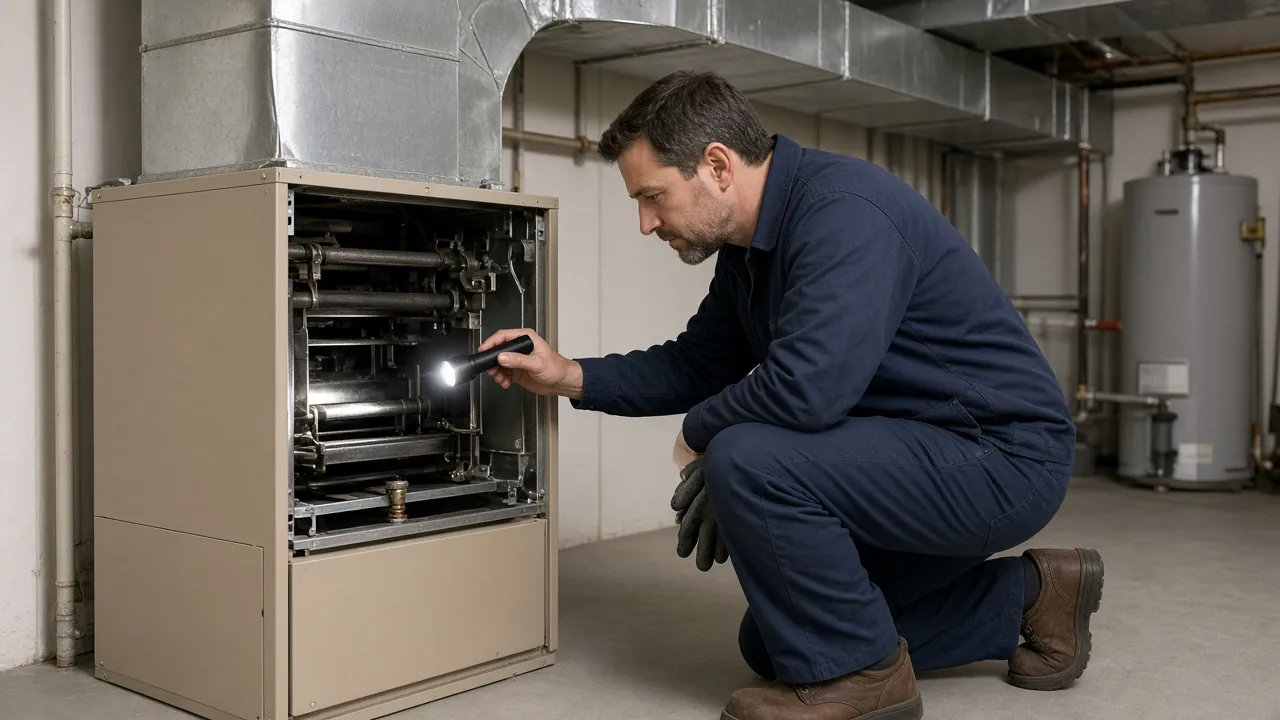
They check the vent pipe, the flue draft and the burners, and test for carbon monoxide. On older furnaces they look for signs of a cracked heat exchanger.
- Explain the fix and price
You hear what failed and what it costs before any part goes in. If the furnace is old and the repair is large, they lay out repair and replacement side by side.
- Repair and run a full cycle
After the fix, the furnace runs a full heating cycle. Your technician checks the temperature rise across the furnace and confirms the safeties work.
Carbon Monoxide Is the Real Risk
The EPA warns that fuel burning appliances that are not adjusted or vented right can give off carbon monoxide, a gas you cannot see or smell. In a furnace, that can come from a blocked flue, a disconnected vent, a cracked heat exchanger or a burner that is out of adjustment.
- Put a CO alarm near every sleeping area and on each level of the home.
- Keep the area around the furnace clear of boxes, paint and gas cans.
- Keep snow and ice off the vent pipes on the side of the house, a common issue with high efficiency furnaces.
- Have the furnace and vent checked every fall.
The Pueblo Regional Building Department notes that smoke and CO alarm placement is checked as part of a furnace replacement permit.
Furnace Replacement
Sometimes repair stops making sense. A cracked heat exchanger on an old furnace, a failed control board on a unit near 20 years old or a pattern of yearly breakdowns all point toward replacement.
A good furnace replacement includes:
- A heat load calculation, not just the size on the old label.
- A permit. The building department FAQ says a mechanical and or electrical permit is required to install or replace a furnace.
- Venting sized for the new furnace, plus a condensate drain for high efficiency models.
- A high altitude setup per the manual and a gas pressure check.
- A combustion and temperature rise test at startup.
If Black Hills Energy supplies your gas, its 2026 Colorado gas rebate application lists rebates for qualifying high efficiency furnaces. Terms change each year, so check the current form before you buy. ENERGY STAR lists certified gas furnaces as well.
Furnace Maintenance That Pays Off
- Check the filter monthly in winter and change it when it looks dirty. The Department of Energy suggests a monthly check.
- Keep supply and return vents open and clear of furniture and rugs.
- Test CO and smoke alarms each month.
- Book a fall tune up so the igniter, sensor, burners, vent and drain all get looked at before the first cold front.
Furnace Repair Questions
Why does my furnace turn on and then shut off?
Common causes are a dirty flame sensor, a dirty filter tripping the high limit switch, or a vent or pressure switch problem. The light code on the board usually points the way.
My furnace is blowing cold air. What should I check?
Make sure the thermostat is set to heat and the fan is on auto, not on. Check the filter and the furnace power switch. If it still blows cold, the burners are not lighting and it needs service.
How long do gas furnaces last?
Many last 15 to 20 years with good care. Age alone is not a reason to replace one, but an old furnace with a major failure is worth a second look.
Is a yellow flame a problem?
A healthy gas flame is mostly blue. A yellow or lazy flame can point to poor combustion, which can raise carbon monoxide. Have it checked.
Should I cover my furnace intake and exhaust pipes in winter?
No. Keep them open and clear of snow and ice. A blocked pipe will shut the furnace down and can be a safety risk.
Same day service option
Get Your Heat Back On in Pueblo
A cold night is no time to wait. Send the short form and a local technician will reach out to set a time. Same day service is an option when you ask early.
More services
Other HVAC services in Pueblo, CO
AC Repair
Warm air, frozen lines, short cycling or a dead condenser, diagnosed before any part is changed.
Heating Repair
Boilers, wall furnaces, baseboard and radiant heat, plus the odd systems older homes still run.
Heat Pumps
Repair and installation of standard and cold climate heat pumps, including dual fuel setups.
Ductless Mini Splits
Ductless heat pumps for additions, garages, basements and older homes with no ductwork.
Air Duct Cleaning
Honest advice on when duct cleaning helps, and a full source removal job when it does.
AC Installation
New and replacement central air, sized with a load calculation and installed with a permit.
Sources
- NOAA NCEI: U.S. Climate Normals
- U.S. EPA: Carbon Monoxide's Impact on Indoor Air Quality
- U.S. Department of Energy: Home Heating Systems
- ENERGY STAR: Furnaces
- Pueblo Regional Building Department: FAQ
- Black Hills Energy: Colorado Gas Residential Rebates